Posts

LANDSCAPE DESIGN

Image
1. AN INTRODUCTION TO LANDSCAPE DESIGN A. DEFINING LANDSCAPE 1. The first time the term ‘Landscape Architecture’ was used has been referenced to Gilbert Laing Meason’s published book, “The Landscape Architecture of The Great Painters of Italy” in 1828. He used it to describe the relationship between architecture and landscape, the built and natural form. 2. John Claudius Loudon (1783-1843) (Scottish botanist and planner who started Gardenesque), gave it wider publicity in his publications (E.g. “Landscape Gardening and Landscape Architecture of the Late Humphrey Repton”. 3. American Frederick law Olmsted (1822-1903) gave to it the worldwide recognition through his winning design of Central Park, and later formed the landscape architecture profession in America, making this term the professional title and worldwide professional body; the International Federation of Landscape Architects (IFLA). 4. In Europe, it was adopted by Patrick Geddes (1854-1932) (Scottish biologist and...
Residential Design-2

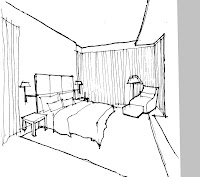
Formal Public Zone - The Foyer - Access & Feng shui - Sets the tone - Availability of powder room or mirror or closet - Character of a transitional space - The Living Room - Easy flow from foyer - Placement away from major circulation - Planned for conversation & recreation - Focal point & furnishing - Lighting & mood - Basic system - The Dining Room - Formal dining - Food preparation area conveniently located nearby - Seeting & finishes, features etc..... Informal Public Zone - The Kitchen - Screened from the view of public generally - Working centers-refrigerator & storage: sink area & cooking area - Working counter surface - Appliance & utensil storage - Food storage - Breakfast Room - For informal eating & quick snacks - Bars, counters & stools - By window or in alcove - Family Room / Den or Study - Relaxed mood - Sufficient storage & built-ins - Flexible space for a variety of recreational activities - Utility Roo...

Residential Design

Image
Programming & Planning -Site - Context - Orientation - Cross Ventilation - Occupants & Users - Scope of works. The inclusion of fixed & loose fitment. - Spatial requirements other design disciplines. - Budget. Establishing the standards required & affordable under the project. Priority & Apportionment of the budget for systems, fitment, furnishing & finishes, features etc... -Integration of the required building services under the project. Includes -Basic system -Appliances -Sensory features - lighting, sounds & smell -Building code requirements -Household shelter -Fire compartments & rating -Ventilation & exhaust system -Percentage of natural lighting & ventilation -Storage, fitment & furnishing requirements -Scope, concept & style preference

Exhibition Design

Image
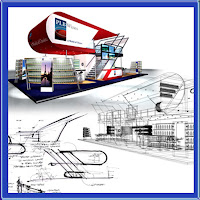
Exhibition Design Design Process -Telling a story -Concept development -Design development -Materials -Media and technology -Lighting and acoustic design -Exhibition design and the environment -Documentation Telling a story -All exhibitions have one important thing in common; they all tell a story. -Creates a story from four elements; a narrative, a narrator, a path, and a context. - Narrative : to determine the message that they wish to tell the audience. The message becomes a story with a clear beginning, middle, and end. - Narrator : a narrator is needed to drive the story forward. The narrator can be created using any number of mediums, such as text, graphics, or technology. Most exhibitions employ multiple narrative mediums. - Path : The path gives the story its structure, transforming the narrative into a three-dimensional space, which brings the story to life for each visitor. -The space must be organized into a sequence that relates to the story and visitors who will experience...

Show Rooms

Image
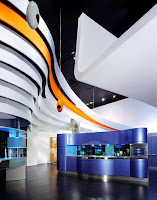
Show Rooms -Showrooms are designed to display a company’s products. -Generally, they are not accessible to the public. -Showrooms are designed to last an average of one to five years at a permanent location. -Showrooms need to be design with flexibility as the exhibit such as display cases, tables, and shelves will be relocated or changed according to the seasons and trends. -Lighting plays a critical role in zoning out spaces, so it can help to make a space flexible. Samples References - What is exhibition design? Jan Lorenc / Lee Skolnick / Craig Berger - Exhibition Design Arian Mostaedi

Trade Shows

Image
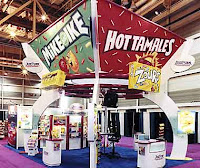
Trade Shows -Trade shows present and organization’s products and services. -They are targeted at a specialized audience purchasers and industry. -The designs need to communicate the message to the audience very quickly and bluntly, and the amount of content is generally low. -Trade show design can be fast-paced. The process can be as short as two months for both design and build on a large-scale project. -In contrast to museums, trade shows are market-driven, can plan for these changes dynamically through the use. Samples References - What is exhibition design? Jan Lorenc / Lee Skolnick / Craig Berger - Exhibition Design Arian Mostaedi

Corporate Museum

Image
Corporate museums -Typically located in a company’s headquarters or a major manufacturing plant and to display a corporation’s story and philosophy. -The museums can target a niche audience, such as company staff and clients, general public. -Design of corporate displays can follow the techniques commonly used in art museums. -Most corporations are continually evolving, so it needs to be flexible and adaptable. -Designers can plan for these changes dynamically through the use of multimedia and computer. Sample References - What is exhibition design? Jan Lorenc / Lee Skolnick / Craig Berger - Exhibition Design Arian Mostaedi - www.dezeen.com